Stalking Against Native Women
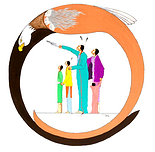
While more than one million women in the United States are stalked each year, American Indian/Alaska Native women are stalked at a rate at least twice that of any other race. Statistics established by the 1998 National Violence Against Women Survey reflect that 17 percent of American Indian and Alaska Native women are stalked in their lifetime, compared to 8.2 percent of white women, 6.5 percent of African-American women, and 4.5 percent of Asian/Pacific Islander women.
The reasons for these problems are many and are as uniquely varied as the cultures, customs and traditions of the more than 500 federally-recognized American Indian and Alaska Native tribes. The result of complex relationships that have historically existed between tribes and federal and state governments, public policy dating back to the 1830s has over time created substantial jurisdictional issues that directly impact the type and quality of victim response programs in Indian country.
Sharing our Stories of Survival Trainer’s Manual is a guide specifically for those interested in providing workshop presentations based on the chapters of Sharing our Stories of Survival. A course on Violence Against Native Women might be taught in any number of disciplines: for example, social work, psychology, advocacy, history, legal studies, criminal justice, nursing, or medicine. However, a full semester or quarter-long course is not always feasible - learning may take place at conferences, meetings, community gatherings, or staff trainings. This manual is specifically designed to give guidance to presenters of workshops, conference plenary sessions, and staff and community training by domestic violence and sexual assault advocates.
Tribal Sexual Assault and Stalking Resource Series
Tribal Legal Code Resource: Sexual Assault and Stalking Laws  was developed by the Tribal Law and Policy Institute in conjunction with the Southwest Center for Law and Policy to be a guide for drafting or revising victim-centered tribal criminal laws on sexual assault and stalking. It is written with a philosophy that tribal laws should reflect tribal values. In addition, writing a tribal law usually requires careful consideration of how state and/or federal laws might apply in the community. This resource guide includes sample language and discussion questions which are designed to help tribal community members decide on the best laws for their community. This resource was revised and updated May 2012, including changes addressing the 2010 enactment of the Tribal Law and Order Act. was developed by the Tribal Law and Policy Institute in conjunction with the Southwest Center for Law and Policy to be a guide for drafting or revising victim-centered tribal criminal laws on sexual assault and stalking. It is written with a philosophy that tribal laws should reflect tribal values. In addition, writing a tribal law usually requires careful consideration of how state and/or federal laws might apply in the community. This resource guide includes sample language and discussion questions which are designed to help tribal community members decide on the best laws for their community. This resource was revised and updated May 2012, including changes addressing the 2010 enactment of the Tribal Law and Order Act.
Law Enforcement Protocol Guide: Sexual Assault (Including a Model Sexual Assault Protocol) was developed by the Tribal Law and Policy Institute in conjunction with Southwest Center for Law and Policy as a tool for improving the investigation of sexual assault crimes. Effective investigations increase the likelihood of victim participation and increase the probability of convictions in tribal, state, and/or federal courts. This guide focuses on the development of an internal protocol for law enforcement. A law enforcement protocol can enhance the efforts of all community agencies in addressing sexual violence. Once your tribal government has strong laws in place, this publication will help you create policies and protocols for your law enforcement agency to enforce your laws.
Prosecutor Protocol Guide: Sexual Assault (Including a Model Sexual Assault Protocol) was developed by the Tribal Law and Policy Institute in conjunction with Southwest Center for Law and Policy as a tool for improving the prosecution of sexual assault crimes. Holding offenders accountable for their actions is a key part of making your community safe. This publication is designed to help your prosecutor’s office ensure consistency and compassion for all survivors. This guide focuses on the development of an internal protocol for tribal prosecution. A prosecutor protocol can enhance the efforts of all community agencies in addressing sexual violence.
Sexual Assault Response Team (SART) Resource was developed by the Tribal Law and Policy Institute in conjunction with Southwest Center for Law and Policy as a guide to creating cohesive policies between tribal agencies. Victims of sexual assault deserve a coordinated, comprehensive response from a variety of community agencies. This SART resource provides a starting point for developing victim-centered SART teams in your community.
Final Report: Focus Group on Public Law 280 and the Sexual Assault of Native Women On August 15 - 16, 2007 the Office on Violence Against Women (OVW) hosted a focus group in Green Bay, Wisconsin to discuss challenges to, and opportunities for, collaboration between states and tribes in Public Law 280 jurisdictions to address sexual assault in Indian country. The Tribal Law and Policy Institute provided technical assistance and collaborated with OVW on the design and delivery of the session. This final report details the event.
 Under a grant from the Office on Violence Against Women, the Tribal Law and Policy Institute has developed and posted a Tribal Protection Order website (see www.TribalProtectionOrder.org ). This website is designed to provide both tribal and non-tribal entities with a clearinghouse of information and resources pertaining to the issuance and enforcement of protection orders. Under a grant from the Office on Violence Against Women, the Tribal Law and Policy Institute has developed and posted a Tribal Protection Order website (see www.TribalProtectionOrder.org ). This website is designed to provide both tribal and non-tribal entities with a clearinghouse of information and resources pertaining to the issuance and enforcement of protection orders.
Articles
Addressing Stalking in Indian Country, by Rebecca St. George, is available on the Minnesota Center Against Violence and Abuse
Website.
Addressing Stalking in Native American Communities by Jo Hally, is available from the National Center for Victims of Crime Website.
Stalking In Indian Country by Hallie Bongar White, is available from the Southwest Center for Law and Policy.
.
The Southwest Center for Law and Policy is a non-profit organization providing legal education and technical assistance on domestic violence, sexual assault, elder abuse, child abuse, abuse of disabled persons, and stalking in tribal communities. The center is located in Tucson, Arizona and travel the nation training law enforcement, attorneys, judges, victim advocates, tribal lay legal advocates, health care professionals, and community members.
Anti-Stalking Laws
Several federal laws make crossing a jurisdictional line (including a tribal jurisdictional line) to commit stalking a federal offense. Read more about these laws at the National Stalking Center Website.
The National Stalking Center Website also highlights a few Tribal Stalking Codes.
|